

Staying in central Bath sounds convenient, but it is not the only way to experience the city well.
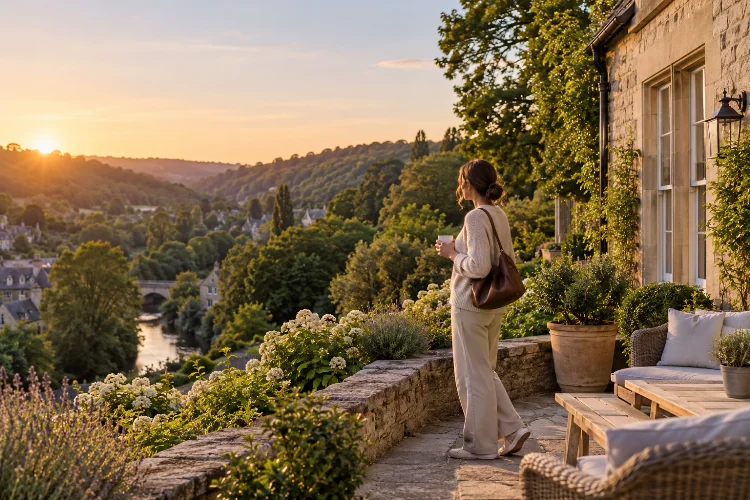
Just outside the urban bustle, Limpley Stoke offers a very different atmosphere: wooded hills, limestone houses, River Avon scenery, quiet lanes, and easy access to surrounding countryside.
That contrast makes exploring Bath from Limpley Stoke without staying in the city centre an appealing option for travellers who want cultural sightseeing during the day but prefer somewhere calmer in the morning and evening.
Nearby Freshford is particularly useful. Visit Bath describes the village as roughly nine minutes from Bath by train, placing the Limpley Stoke Valley surprisingly close to the city’s major attractions while retaining a genuinely rural feel.
The key is planning your days around transport rather than treating Limpley Stoke like a distant country retreat.
With sensible timing, you can visit Roman ruins, Georgian streets, museums, restaurants, and shops, then return to the Avon Valley before the evening feels rushed.
Why Base Yourself Outside Central Bath?
The biggest advantage is contrast.
Bath is compact, beautiful, and highly walkable, but the centre can feel busy during weekends, holidays, and peak sightseeing hours.
Limpley Stoke provides the opposite experience. Instead of stepping outside into shopping streets and visitor traffic, you begin the morning beside an English valley landscape.
That does not mean giving up convenient access.
Visit Bath promotes Freshford and Avoncliff as rail-accessible countryside destinations close to Bath. Freshford in particular is described as around nine minutes away by train, making it practical for visitors who want a rural base while spending substantial time in the city.
This setup works especially well for stays of two or three nights. You can devote full days to Bath while keeping mornings or evenings free for short countryside walks.
It feels more like combining a city break with a small rural escape than compromising between the two.
Use Freshford as Your Main Rail Gateway
For most visitors without a car, nearby Freshford is the most useful transport link.
Great Western Railway currently publishes services covering the Bath Spa and Westbury corridor, which includes the route serving Freshford. Timetables can change seasonally, so always check the day’s departures rather than relying on an old schedule.
A practical routine is simple: reach Freshford station in the morning, take the train into Bath Spa, and spend the day exploring on foot.
Bath Spa station is very central. From there, the Roman Baths, Bath Abbey, shops, restaurants, and riverside areas are all easily reached without needing another train.
The return journey also creates a pleasant separation between city and countryside. Instead of ending the evening surrounded by crowds, you leave Bath behind and return toward the quieter Avon Valley.
Just avoid planning around the final train of the night. Leave yourself at least one earlier option in case dinner, traffic, or an attraction takes longer than expected.
Build Each Bath Day Around One Main Theme
Because you are travelling in from outside the centre, your itinerary should be focused rather than overloaded.
Bath contains enough attractions for several days. UNESCO highlights its exceptional Roman remains, eighteenth-century Georgian planning, Palladian architecture, monumental crescents, terraces, and relationship with the surrounding landscape.
Trying to cover all of that in one day usually produces a rushed experience.
A better first-day plan might focus on Roman and medieval Bath. Begin around Abbey Church Yard, visit the Roman Baths, explore Bath Abbey, then wander toward Pulteney Bridge and the river.
A second day can concentrate on Georgian Bath instead. Walk through Queen Square, The Circus, Royal Crescent, and surrounding streets before adding a museum, afternoon tea, or relaxed meal.
Using themes reduces unnecessary backtracking and makes travelling from Limpley Stoke feel much more convienient.
Make Bath’s Historic Centre Your First Priority
If this is your first visit, begin with the historical heart of the city.
Bath developed around its natural thermal springs, which the Romans transformed into a major religious and bathing complex. UNESCO considers the Roman remains, including the Temple of Sulis Minerva and the baths complex, fundamental to the city’s World Heritage significance.
From there, centuries of history sit almost on top of one another.
Bath Abbey occupies the same central area, while Georgian streets spread outward around the older city.
This concentration is one reason staying outside the centre works so well: once you arrive at Bath Spa station, you can spend most of the day walking rather than repeatedly using public transport.
Pulteney Bridge is another straightforward stop. Designed by Robert Adam and built in the eighteenth century, it famously carries shops across both sides of its span.
From the bridge, continue toward Great Pulteney Street or simply follow the River Avon before lunch.
Save Georgian Bath for a Slower Afternoon
Bath becomes especially rewarding when you stop treating individual buildings as isolated attractions.
The Georgian city was designed around connected streets, squares, crescents, and green spaces. UNESCO specifically highlights the way its architecture integrates with the surrounding hills and landscape.
The Royal Crescent is the obvious landmark.
Designed by John Wood the Younger and built between 1767 and 1775, it consists of 30 Grade I listed terrace houses arranged around a broad lawn.
Nearby, The Circus provides another dramatic example of Georgian urban design, while Visit Bath describes it as one of the city’s essential architectural landmarks.
Give this part of the city time. Walk slowly, notice the stone façades and proportions, and take breaks rather than racing between locations.
Returning to a rural base later makes this slower style of sightseeing particularly satisfying.
Use Limpley Stoke for Your Countryside Time
One advantage of staying outside Bath is that countryside exploration no longer needs to compete with city sightseeing.
Instead of using one of your Bath days for a separate rural excursion, you already wake up within the Limpley Stoke Valley.
Freshford and Avoncliff are both promoted by Visit Bath as starting points for scenic walks beside the River Avon. The route between them can also connect with the Kennet & Avon Canal at Avoncliff Aqueduct.
This creates several easy options.
You might spend an hour walking before travelling into Bath. Alternatively, dedicate one morning to the valley, have lunch locally, then take the train into the city for a museum, shopping, and dinner.
For energetic travellers, the Kennet & Avon Canal offers an even longer connection. Visit Bath notes that the canal path runs through the Limpley Stoke Valley between Bradford-on-Avon and Bath, with the complete walking journey taking several hours.
That route turns the relationship between countryside and city into part of the experience itself.
Consider Driving Only When It Actually Helps
Having a car can be useful around Limpley Stoke, but driving directly into Bath every morning is not automatically the easiest choice.
Central Bath’s appeal comes partly from its compact historic streets, and once you are there, most major sights are best explored on foot. Using the nearby rail connection can remove the need to think about city-centre parking altogether.
A car becomes more valuable when your plans extend beyond Bath.
For example, you might combine Limpley Stoke with rural Wiltshire, Bradford-on-Avon, or other countryside destinations where public transport is less frequent.
If your entire itineray revolves around central Bath, however, repeatedly driving in and out may add unnecessary complexity.
Think of the car as a tool for regional exploration rather than the default solution for every journey.
Plan Your Evenings Differently From City-Centre Travellers
The biggest lifestyle difference appears after the attractions close.
Someone staying in central Bath can walk straight from dinner to their hotel. From Limpley Stoke, you need to think about the journey home.
That sounds inconvenient, but it can actually improve the structure of the day.
Book an earlier dinner when you want to return by train, or enjoy your main restaurant experience at lunchtime and keep the evening simple. Check the current rail timetable before sitting down rather than discovering afterward that your preferred service has already gone.
On another evening, skip Bath completely.
Return to the valley in the afternoon, take a countryside walk, and enjoy the slower pace outside the city. Visit Bath itself emphasises the contrast between central Bath and nearby Freshford, which feels considerably more secluded despite its short rail journey.
That alternation prevents a multi-day sightseeing trip from becoming exhausting.
Who Benefits Most From a Limpley Stoke Base?
This approach works particularly well for travellers who value quiet surroundings more than nightlife immediately outside their door.
Couples planning a slower cultural break may appreciate the separation between sightseeing and accommodation. Walkers can combine Bath with the River Avon, Freshford, Avoncliff, and canal routes without scheduling a seperate countryside excursion.
It can also suit repeat visitors.
If you have already seen Bath’s major attractions once, staying in the valley encourages a more balanced trip built around neighbourhood wandering, museums, long lunches, and countryside exploration.
The arrangement is less suitable for anyone planning to stay out very late every night or repeatedly return to accommodation during the day.
In that case, paying for central convenience may be worthwhile.
The important point is that staying outside Bath should be a deliberate travel style, not simply a cheaper-looking accommodation choice.
Exploring Bath from Limpley Stoke without staying in the city centre can give you a richer trip than treating Bath as an isolated urban destination.
Nearby Freshford offers a practical rail connection, while the surrounding Avon Valley adds riverside walking, quiet mornings, and a completely different atmosphere.
Plan Bath in focused sections: Roman and medieval sights on one day, Georgian architecture and museums on another. Use the city for culture, restaurants, and historic streets, then return to Limpley Stoke for countryside and a slower evening.
Before travelling, check current rail times and attraction opening hours, then resist the urge to overschedule. Done well, this approach gives you two experiences in one trip – the elegance of Bath and the calm of rural England – without needing to choose between them.
